SMART Rebar — Corrosion-Resistant Reinforcement for Island Construction
Concrete has three guarantees: it turns gray, it gets hard, and it cracks.
However, these cracks should not lead to compromised structural integrity or buckling of solid concrete walls.
Cracks do not have to become structural failures. The real danger begins when salt and moisture reach reinforcing steel, causing corrosion, expansion and spalling inside the concrete. SMART Rebar eliminates that corrosion problem with high-strength fiberglass reinforcement designed for harsh coastal environments.
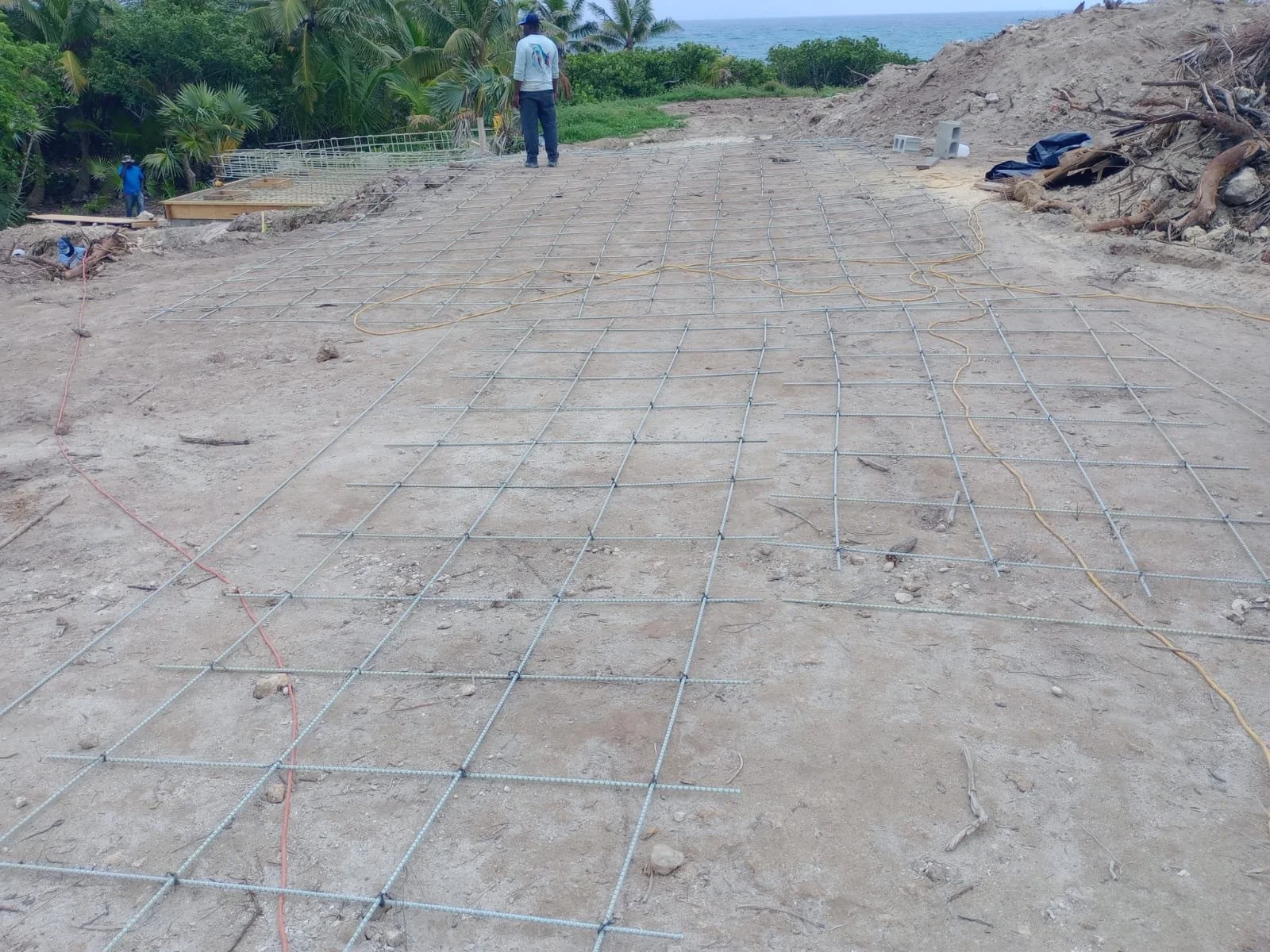
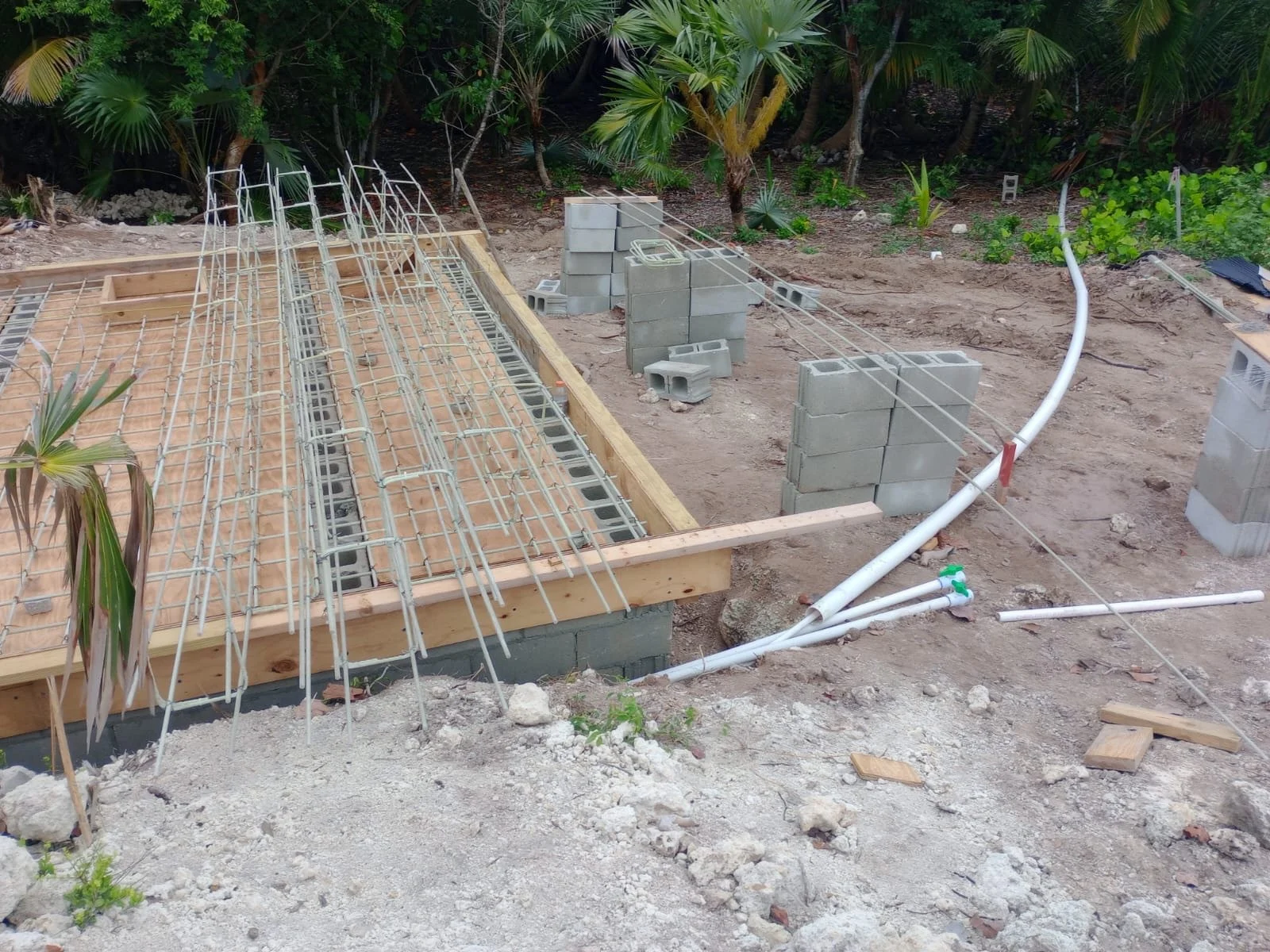
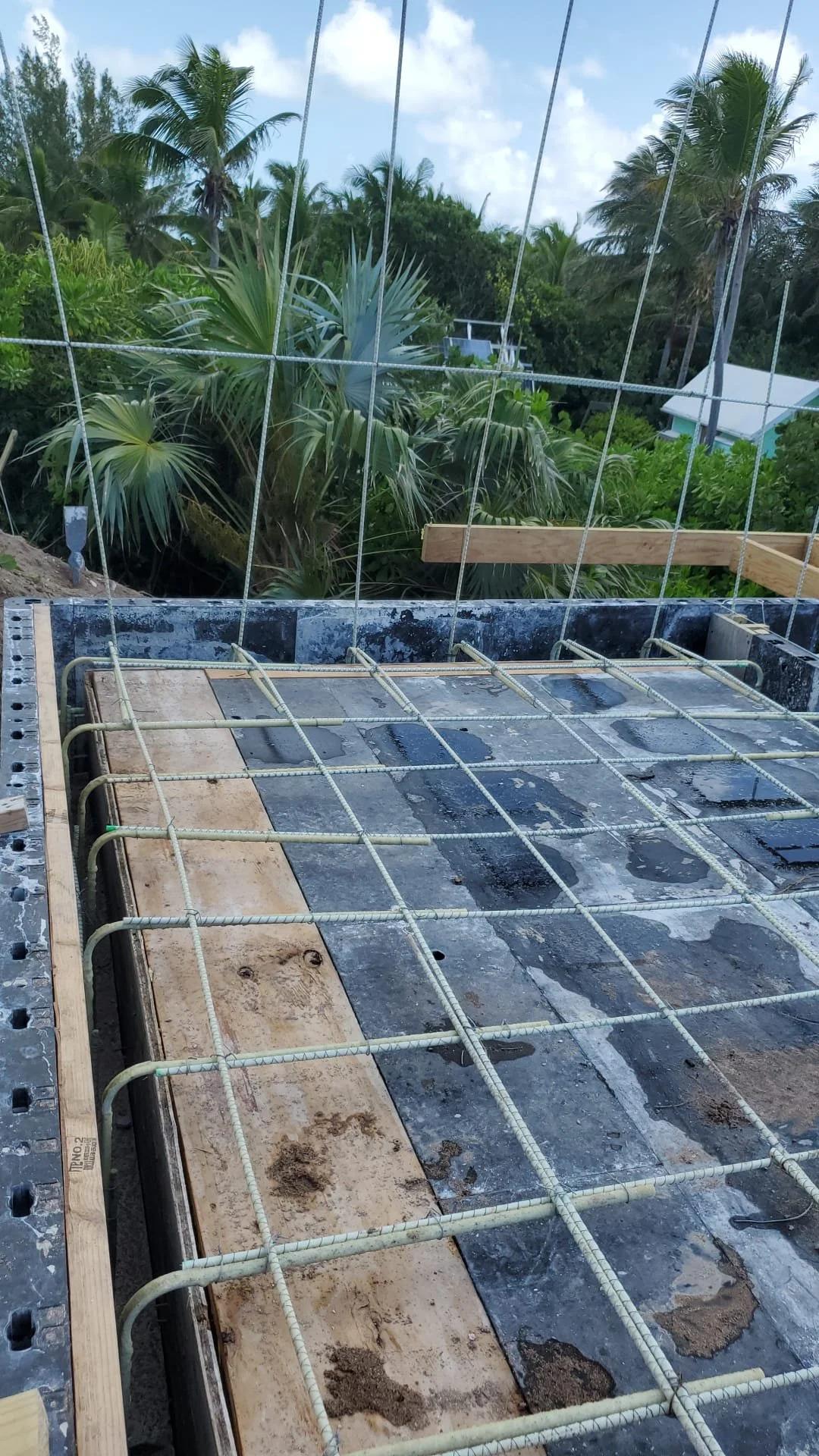
SMART Rebar is a high-performance fiberglass reinforcing bar designed for concrete construction in harsh coastal and corrosive environments. Unlike conventional steel rebar, it will not rust or corrode when exposed to saltwater, humidity or chlorides, helping protect the concrete around it and extend the service life of the structure.
Lightweight, strong and easy to handle, SMART Rebar is well suited for foundations, slabs, walls, docks, seawalls, pools and other reinforced concrete applications throughout The Bahamas and Caribbean. It provides a durable alternative to steel in projects where corrosion resistance, long-term performance and reduced maintenance are important.
Bahamas Building Supply supports SMART Rebar projects with product data, conversion assistance, takeoffs and technical guidance to help contractors, architects and engineers specify the right reinforcement for the job.
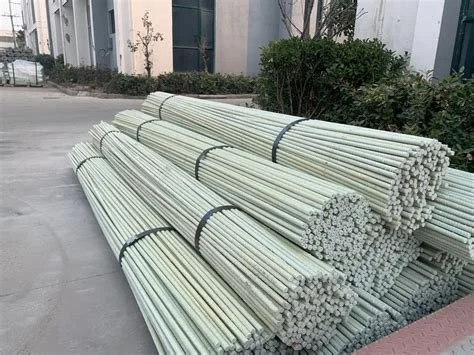
SMART Rebar: Fiberglass Rebar
Poly 46: #2,3,4 and 5 for slabs and paving
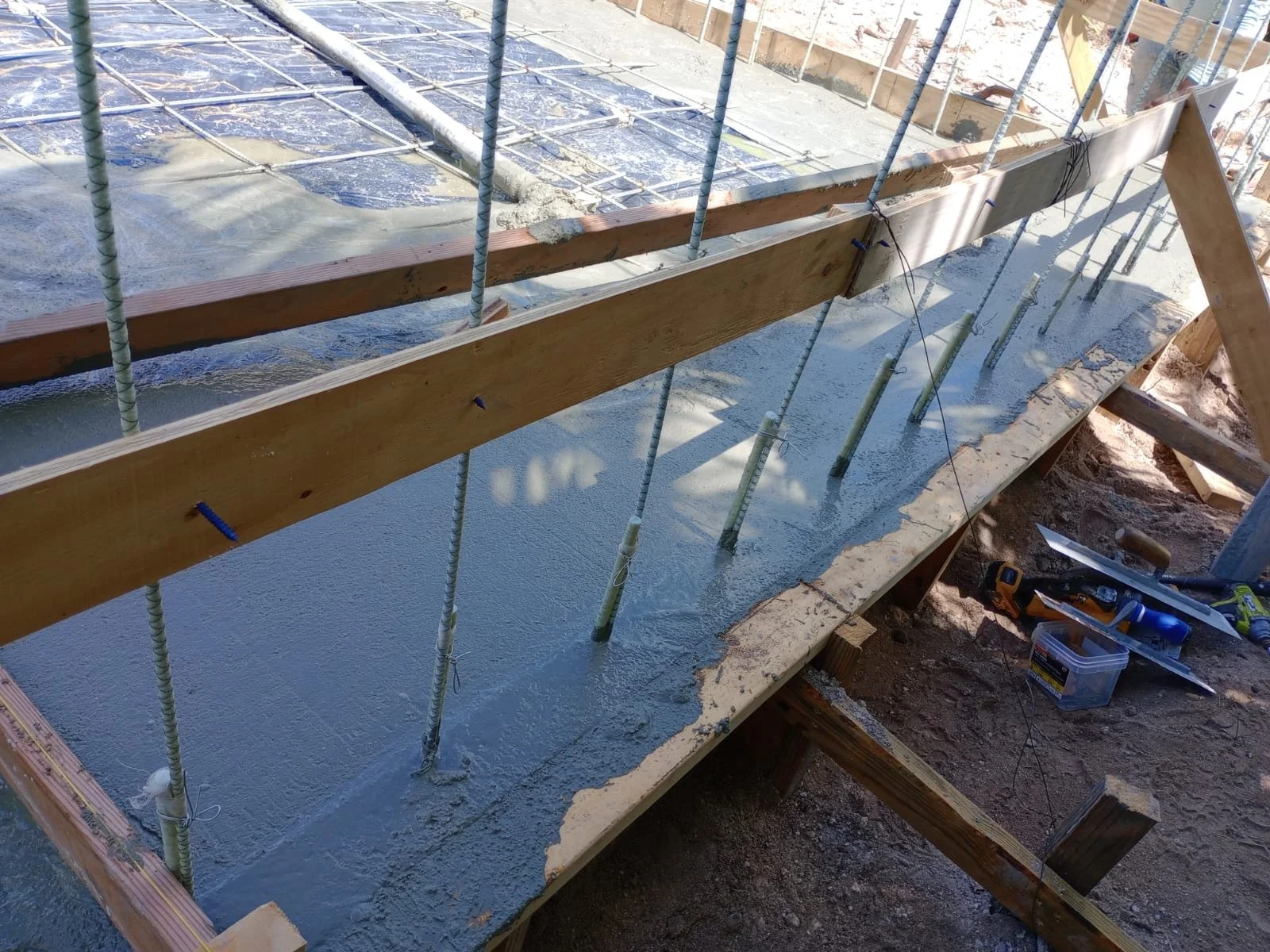
V-Rod 46: #4 for walls
V-Rod 60: #4,5,6,7,8 and 10 for columns and beams
Typical Bahamian bends in-stock
Custom bends to order
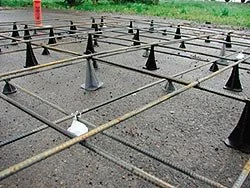
Why SMART Rebar
Will not rust or corrode
Resistant to saltwater and chlorides
Lightweight and easier to handle than steel
High tensile strength
Reduces long-term concrete damage caused by reinforcing corrosion
Non-conductive and non-magnetic
Lower maintenance over the life of the structure
Bends when driven over by a concrete truck and returns to shape.

Typical Applications
Foundations and slabs
Walls and columns
Pools
Seawalls and marine structures
Docks and piers
Roads and infrastructure
Coastal and hurricane-resistant construction

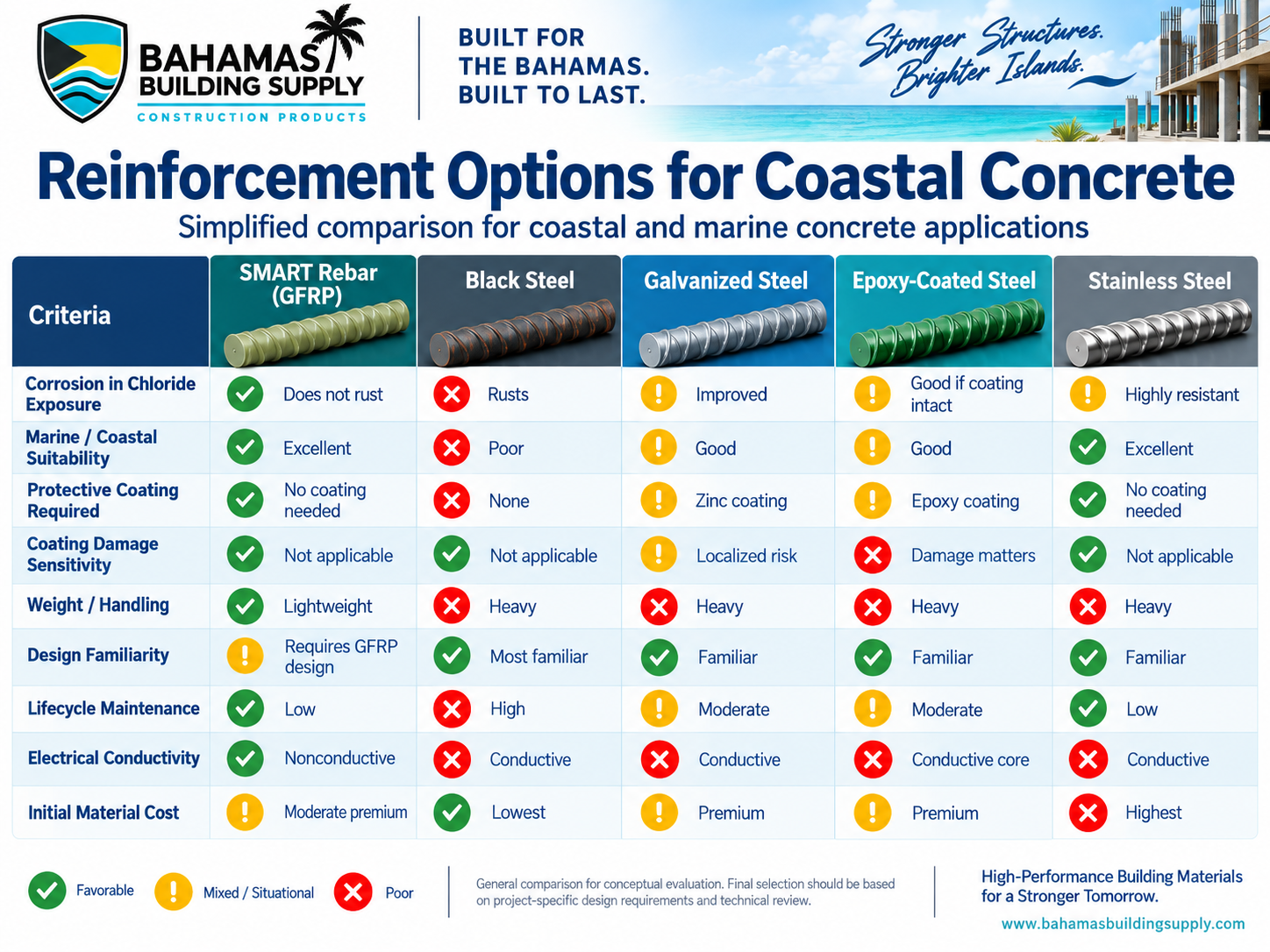
SMART Rebar (GFRP)
A lightweight, nonmetallic reinforcement made from glass fibers and resin. It does not rust, making it especially attractive for marine, coastal and chloride-exposed concrete. Its lower stiffness compared with steel means it must be designed using GFRP-specific provisions rather than treated as a simple bar-for-bar substitute.
Black Steel
Traditional carbon-steel reinforcement remains the lowest-cost and most familiar option. It offers high strength and well-established design methods, but it is vulnerable to chloride-induced corrosion, which can lead to cracking, spalling and increased maintenance in aggressive coastal environments.
Galvanized Steel
Galvanized reinforcement adds a zinc coating to conventional steel to improve corrosion resistance. It generally performs better than black steel in chloride exposure, but protection depends on the condition and life of the zinc layer and can be reduced if the coating is damaged.
Epoxy-Coated Steel
Epoxy-coated reinforcement uses a protective coating to reduce contact between the steel and corrosive agents. It can provide good performance in coastal environments, but handling, bending and construction damage can compromise the coating and create localized areas of vulnerability.
Stainless Steel
Stainless reinforcement offers very high corrosion resistance and excellent durability in severe marine environments. Performance varies by alloy, and its major limitation is typically the substantially higher initial material cost, which tends to reserve it for critical or long-life structures.
The lowest-cost reinforcement is not always the lowest-cost structure. In coastal environments, corrosion resistance, handling, maintenance and service life all affect the real cost of reinforced concrete.
SMART Rebar offers a strong balance of durability, constructability and lifecycle value without the high initial cost of stainless steel.
Free Plan Review & Rebar Conversion
Already designed with steel? Send us your plans. We can help review the reinforcing schedule and, where appropriate, convert conventional steel reinforcement to SMART Rebar. We can also assist with bar sizing, quantities, bends, stirrups and project-specific technical information.

Proud Members of the FRP Institute

What Dorian Taught Us
more than the vulnerability of buildings. It exposed the long-term weakness of conventional steel reinforcement in a harsh marine environment.
Across the islands, concrete structures were subjected to saltwater, wind-driven rain and prolonged moisture. Once chlorides reach reinforcing steel, corrosion can begin. As the steel rusts, it expands, cracking and spalling the concrete around it and weakening the structure from within.
I
n The Bahamas, that risk is not theoretical. Salt air, humidity and marine exposure are part of everyday construction.
That is one of the reasons we believe fiberglass reinforcement makes so much sense here. SMART Rebar does not rust, is unaffected by chloride exposure, and eliminates one of the most common long-term causes of reinforced-concrete deterioration in coastal environments.
Dorian reinforced a simple lesson: if we are going to build for the islands, we need to build with materials designed for the islands.